SKU:CSA1648M
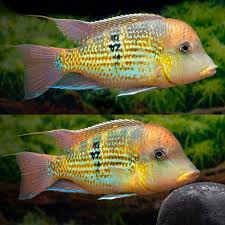
GOLD DUST EARTHEATER (Geophagus .sp "Altu Sinu") *RARE* 3"
GOLD DUST EARTHEATER (Geophagus .sp "Altu Sinu") *RARE* 3"
Out of stock
Couldn't load pickup availability
| Synonyms | None |
| Distribution | Colombia: Rio Sinu |
| Maximum Size | 20cm |
| Temperature | 22-28°C |
| Water Parameters | Soft and slightly acidic. pH: 6.0-7.0, KH: up to 15 degrees. |
| Compatibility | Community with no small fish |
| Sexual Dimorphism | Mature males are much larger, with dominant males also displaying a nuchal hump. |
| Feeding | Flake, granules, cichlid pellets and frozen foods |
Description
Care
This undescribed eartheater is known from the Rio Sinu drainage in Colombia.
The aquarium should be spacious, with a soft sand substrate as these fish like to sift through the substrate at times in their search for food items. Provide plenty of hiding places amongst tangles of driftwood, rocky caves, and robust planting cultivated on the decor (such as Anubias sp. or Java Fern). Vegetation planted into the substrate is likely to be dug up, so is best avoided. Filtration should be efficient with areas of moderate water movement and some calmer resting spots out of the current. Frequent partial water changes will help keep nitrate to a minimum, particularly important as this species is sensitive to deteriorating water conditions. These eartheaters are best described as semi-aggressive and should be maintained as a multi-male (3 or more) mixed sex group in large aquaria, or as a single male with a harem of several females in smaller set ups. Male fish will spend much of their time competing with rival males, particularly when ready to spawn. Tankmates should be chosen with care, avoiding small fish; ideal companions could include other South American cichlids of similar size and temperament, deep-bodied tetras, Loricariids (suckermouth catfish), and large Brochis catfish.
Despite its current scientific classification, this cichlid does not actually have all that much in common with the true eartheaters, and together with the rest of the Red hump group (steindachneri, pellegrini, crassilabrus and a few other undescribed fishes) it's very likely that it will be moved from the Geophagus genus at some point.
Feeding
Omnivorous and will accept most aquarium foods offered. Try to keep it varied with good quality carnivore and herbivore flakes, sinking pellets/sticks, and a mixture of frozen foods such as white mosquito larvae, bloodworm, vitamin/Spirulina-enriched brineshrimp, Mysis, and chopped krill/prawns.
Share