1
/
of
1
SKU:CAT1888S
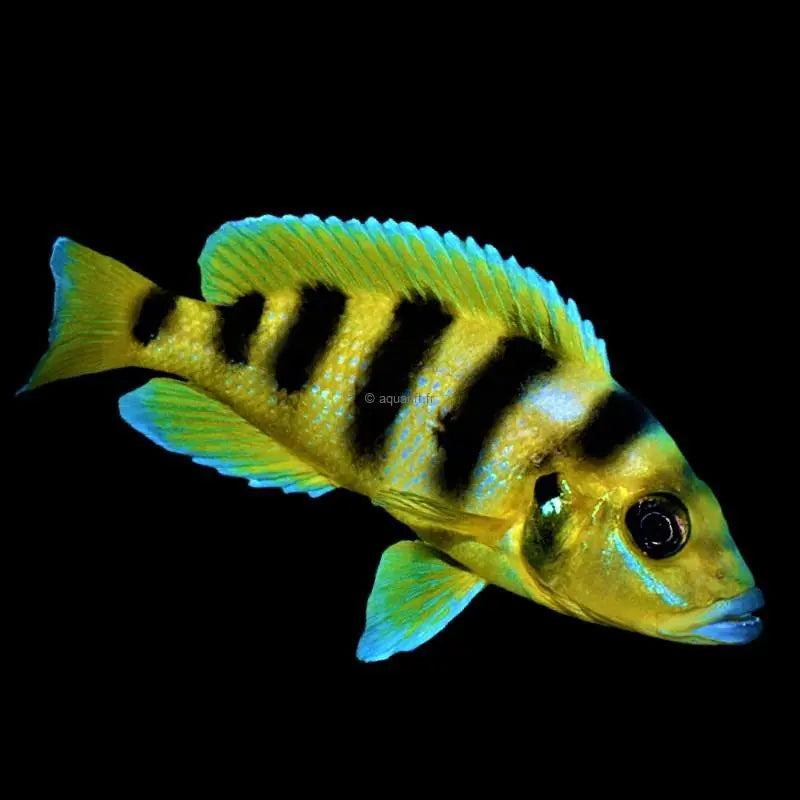
GOLD SEXFASCIATUS ( Neolamprologus Sexfasciatus)
GOLD SEXFASCIATUS ( Neolamprologus Sexfasciatus)
Regular price
$29.99 CAD
Regular price
Sale price
$29.99 CAD
Shipping calculated at checkout.
15 in stock
Quantity
Couldn't load pickup availability
Gold Sexfasciatus (Neolamprologus sexfasciatus), also known as the Gold Kipili or Yellow Six-Bar Cichlid, is a highly striking, predatory African cichlid endemic to the southern half of Lake Tanganyika. It is well-regarded among experienced hobbyists for its vibrant golden-yellow body offset by six bold vertical black bars, paired with an equally intense, aggressive personality
Species Overview
- Scientific Name: Neolamprologus sexfasciatus (formerly Lamprologus sexfasciatus)
- Common Names: Gold Sexfasciatus, 6-Bar Cichlid "Gold", Gold Kipili, Six-Striped Lamprologus
- Max Size: Males reach up to 15 cm (6–7 inches); females are slightly smaller at 12–13 cm.
- Diet: Carnivore/Predator; in nature, they hunt small fish and crush snails.
- Lifespan/Breeding Type: Substrate/cave egg-layer.
Aquarium Care & Parameters
Because Neolamprologus sexfasciatus
is an assertive, highly territorial fish, its tank conditions must be tightly regulated
- Minimum Tank Size: At least 120 to 150 litres (approx. 30–40 gallons) for a single specimen. However, because of their extreme aggression toward their own kind, a 4-foot long aquarium (minimum 55–75 gallons) is highly recommended if you intend to keep a pair. [1, 2, 3, 4]
-
Water Chemistry: Like all Lake Tanganyika species, they require hard, alkaline water.
- pH: 7.8 – 9.0
-
Temperature: 23°C – 27°C (Optimum around 25°C)
- Hardness: 10–20 gH / 9–12 dKH
- Aquascaping: Use a sandy substrate (such as coral sand or aragonite) to help buffer the pH. Provide heavy rockwork, caves, and visual barriers to break lines of sight and allow fish to establish distinct territories.
Temperament & Tank Mates
The Gold Sexfasciatus is moderately to highly aggressive and will not tolerate intruders in its space.
- Do Keep With: Other robust, medium-sized Tanganyikan cichlids that can hold their own, such as Julidochromis species, Altolamprologus calvus, or Cyprichromis.
- Avoid: Small shell-dwellers (which may be killed or harassed) or overly dominant, massive cichlids that will stress the Sexfasciatus.
Breeding Challenges
They are considered difficult to breed in captivity. They are secretive cave-spawners that lay batches of 100 to 300 eggs. A major hurdle for breeders is their pair-bonding behavior: if a pair does not bond correctly, or if they get stressed, the male can turn violently on the female. If a breeding pair successfully forms, it is usually safest to move them into a dedicated breeding tank of their own
Share